

Dr Leonora Alberts Vilakazi
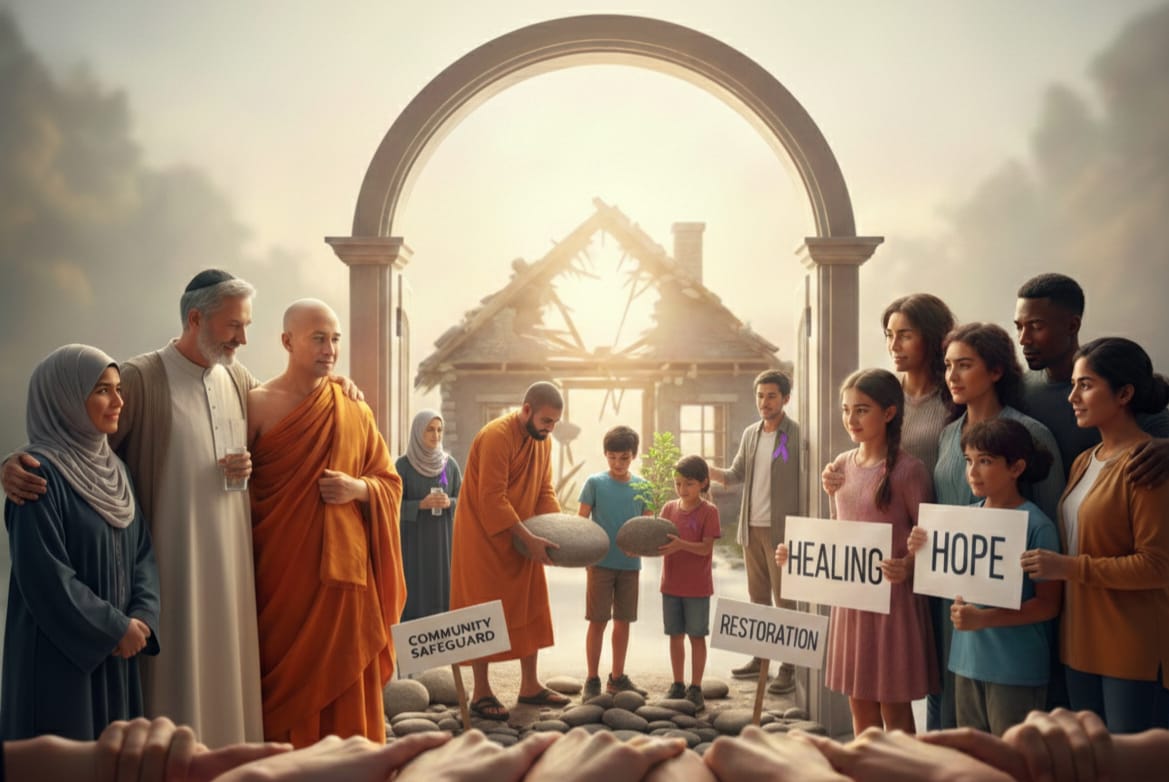
When the domestic bond breaks, the “wider family” of faith and community must step in to bridge the gap between betrayal and healing.
1. Reconstructing the Foundation of Truth
Family restoration cannot be built on a “hush-hush” agreement to move on. It requires a total moral overhaul.
The Death of Denial: Restoration begins the moment the mother stops protecting her own comfort (or the perpetrator) and starts protecting her child.
Atonement over Appearance: The family must shift from worrying about “what people will think” to “how my daughter will heal”.
True restoration is an internal work, not a public relations move.
Restoring the Daughter’s Voice: The daughter must be the one to set the pace. Restoration is not something a parent can demand; it is a privilege they must earn back through consistent, unwavering belief.
2. The Role of Faith as a Moral Compass
In many cases, a parent’s refusal to stand by their child is rooted in a narrow, often distorted, interpretation of religious “honour”.
This is where the interfaith community becomes essential.
Challenging Toxic Theology: Interfaith leaders from diverse backgrounds (Christian, Muslim, Jewish, Hindu, African Traditional, Sikh, etc.) can stand together to declare that no scripture justifies abandoning a victim. By presenting a united front, they strip away the “religious” excuses a parent might use to justify their denial.
The “Chosen Family”
Sanctuary: When a biological mother fails, the interfaith community acts as a surrogate. They provide the emotional, spiritual, and sometimes financial safety net that the home failed to provide.
Mediated Accountability: Interfaith councils or collectives can provide a neutral, spiritually grounded space for “restorative justice”.
They can hold the parent accountable to the higher laws of compassion and truth, guiding them back to their parental duties through counselling and scriptural re-education.
3. Healing the Generational Cycle
Often, a mother’s refusal to stand by her daughter is a sign of her own unhealed trauma or a lifetime of being told to “keep the peace.”
Interfaith Healing Circles: By bringing together different perspectives on suffering and resilience, interfaith groups can help the mother realise that protecting her daughter is a sacred act of breaking a cycle of silence that may have plagued the family for generations.
Collective Advocacy: When different faiths speak with one voice against gender-based violence, it creates a social atmosphere where it becomes “shameful” to ignore the victim, rather than “shameful” to be one.
The Reality of Restoration: We must remember that “family restoration” does not always mean going back to the way things were.
Sometimes, it means building something entirely new – a family where truth is the only currency and where the interfaith community serves as the guardrails to ensure that “never again” actually means something.