

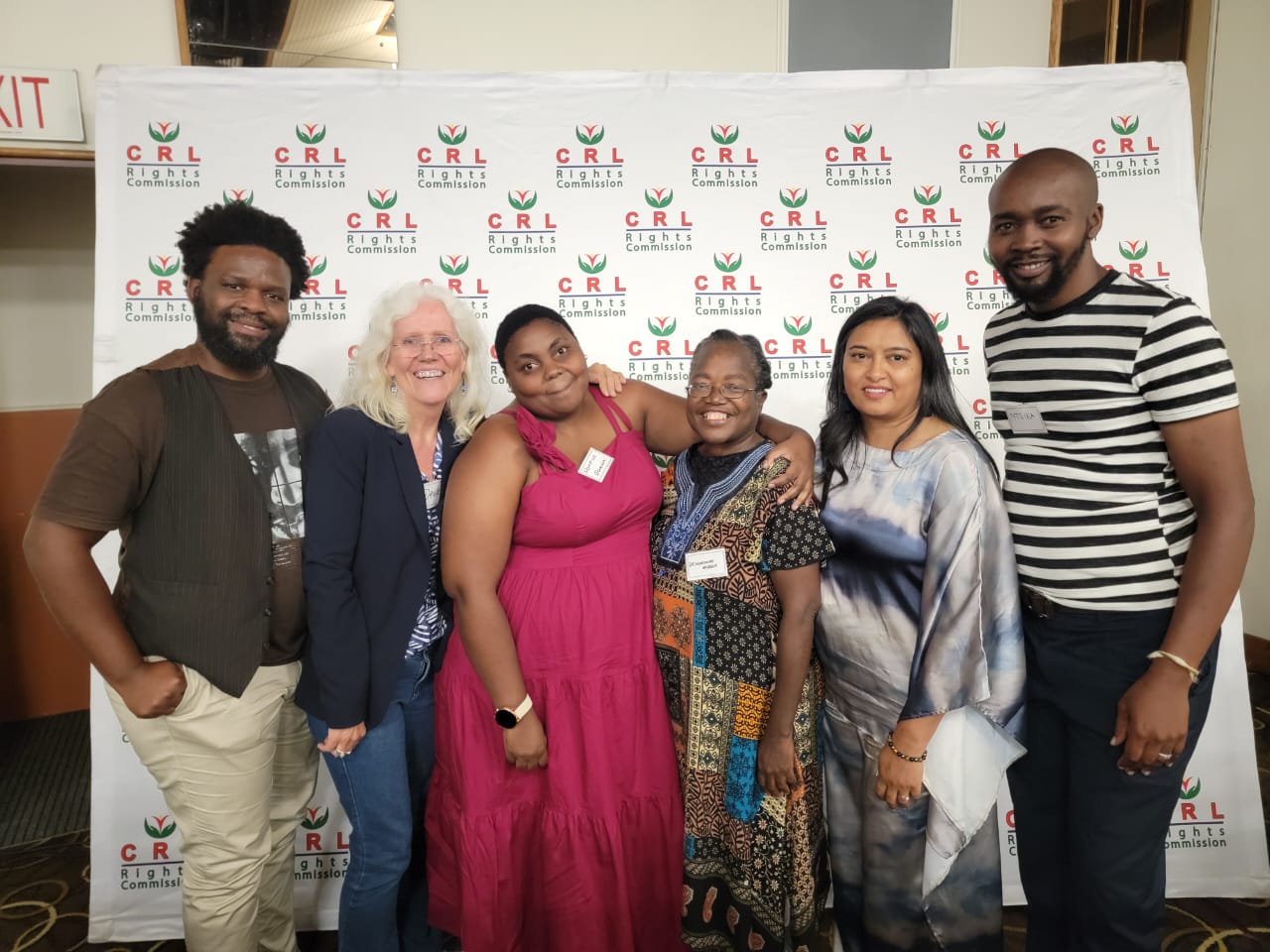
By Daniela Gennrich, Coordinator of WWSOSA, on behalf of the team that attended
On 3 February 2026, the CRL Commission invited We Will Speak Out SA (WWSOSA) and the Faith Action Collective to End GBV to the launch of a new subcommittee of the Section 22 with its own mandate, focusing on a key aspect of accountability: addressing Gender-Based Violence and Femicide (GBVF) within sacred spaces – including Christian and African Traditional spaces.
In her presentation, the CRL Chair, Thoko Mkhwanazi Xaluva, explained that this was motivated by the CRL’s commitment to the protection of the religious freedoms of the most vulnerable, and to ensuring that the voices of GBV survivors, activists and scholars contribute directly to shaping the proposed self-regulation and accountability mechanisms for the religious and traditional sectors
The meeting was attended by several members of the CRL Commission and survivors and activists from diverse backgrounds, many of them people of faith or with an interest in the faith sector who are working on the ground with survivors of GBV. The three commissioners who attended are spearheading this drive to establish the subcommittee, led by the Chair. Four members of the Section 22 Committee attended only the media briefing on 4 February (2 men and 2 of the 3 women recently appointed).
While there was not enough time for deep engagement amongst the participants, the conversation provided an important starting point and mandate for the subcommittee. There was full support for this initiative in principle, based on the shared belief in the crucial role survivor voices need to play in shaping any outcomes finally proposed to Parliament.
Some questions were raised as to how the subcommittee members will be selected and about the kinds of powers it will have to influence the final outcomes (given the power relations inherent in the way the Sec 22 Committee was set up). The Chair responded that people or organisations will be invited to contribute based on their expertise.
The meeting ultimately agreed to broaden the definition of survivors as including women, children, LGBTIQ+ individuals as well as vulnerable men.
The Chair explained three key aspects of the work of the Subcommittee:
- Its Purpose is to address the question of how the proposed self-regulation structures and processes will in practice protect victims of abuse in sacred spaces?
The argument of detractors that ‘the law must take its course’ is flawed, for at least two reasons: The legal system in South Africa is failing survivors, and many cases never reach the courts and yet are highly abusive and undermine the dignity, bodily integrity and religious freedom of victims and survivors. (Reminder: As prescribed in the TOR for the Section 22 Committee, these include, in short – a Code of Conduct, Registration of practitioners and Accountability mechanisms).
- The Process will be threefold:
- Specialised research to answer three broad questions in light of the need to “diagnose and then treat” the problem:
- A priority is to understand the grooming process that gradually ‘hijacks the mind of a victim’ (Cheryl Zondi’s phrase) in insidious ways – and considering how this process may be similar to how cults work. The CRL Chair has asked Erika Bornman (who exposed the abuses at Kwasisabantu Mission some years ago).
- A second relates to documenting the experiences of the LGBTIQ+ community members with respect to spiritual abuse and GBVF in relation to Christian places of worship and the healing sector.
- A third is to understand the experiences of men who are abused in the faith sector, as well as better grasping the psychology of spiritual leaders who use their faith to abuse and control.
-
- Beginning as soon as possible, subcommittee members will collaborate with key partner organisations to facilitate dialogues in all provinces amongst primarily survivors as well as activists and scholars. I advised the CRL to ensure that these processes are truly confidential, safe, and inclusive through very intentional facilitation and including the presence of psychological support, in recognition of the costs of survivors reliving their trauma and the courage it takes to share their stories and present their constructive critique of their faith communities.
-
- The Outcome will comprise a document to be presented to the Section 22 Committee as well as directly to Parliament. The aim is to hear survivors’ recommendations for what would make their places of worship and learning truly safe, inclusive and where all people can enjoy religious freedom and personal dignity and growth.
When asked about how this process will connect with the National Strategic Plan and the End GBVF Collective, she indicated that the outcomes of this process will be communicated directly to the Department of Women, Youth and Persons with Disabilities, and the National GBVF Council (once it is functioning).
Media Conference
This was a bit disappointing, as most of the media we redirected to cover the funeral of a Member of the Gauteng Provincial Parliament. I was asked to represent those who are actively engaging in GBVF Work in the faith sector. I spoke directly after the powerful and moving testimonies of 3 survivors, and realised that it was not possible to just continue to speak out our work as requested. So I requested a moment of silence for the survivors who spoke – as well as all survivors, especially those still unable to speak or free themselves from the tyranny of the spiritual and other forms of abuse they have experienced in their faith spaces. I also affirmed the establishment of the subcommittee as the first national initiative that specifically prioritises the leadership of survivors and those most directly affected. I believe it has huge potential to radically shift the narrative around GBVF in this country.
Way forward for us
From our perspective as WWSOSA and the Faith Action Collective, it is important for us, together with our partners, to engage directly with this process and offer support to the subcommittee, for four reasons:
- Our primary founding principle has always been to ensure that any GBVF initiatives be survivor-led;
- A core criticism of the Section 22 Committee’s establishment, as expressed in our Open Letter to the CRL, related to the absence of the voices of those with direct experience of GBVF- survivors and activists, and those with the research expertise to ensure the outcomes are broadly credible;
- Together with our implementing partners, we collectively have the experience and knowledge to ensure the process is effective, accountable, compassionate and respectful – which is vital if the outcomes are to be credible to those most directly affected;
- A successful outcome of this process will fulfil one of the core Faith Sector Resolutions that emerged from the 2022 National Conference on GBVF, and which we have been working towards through our own channels since then:
Faith Sector Accountability
- Religious institutions must be made safe spaces and mutual accountability mechanisms should be developed to hold leaders and followers accountable for historical and active cases of abuse timeously.
- The existing Faith Action Collective must be strengthened as an interfaith forum for active solidarity, collaboration and critical thinking.
- Forums must be established as spaces to strategise and advocate for the protection of victims/survivors of GBV against perpetrators, strengthen healing for restorative justice and support members in their local activations.