

Dr Leonora Alberts-Vilakazi
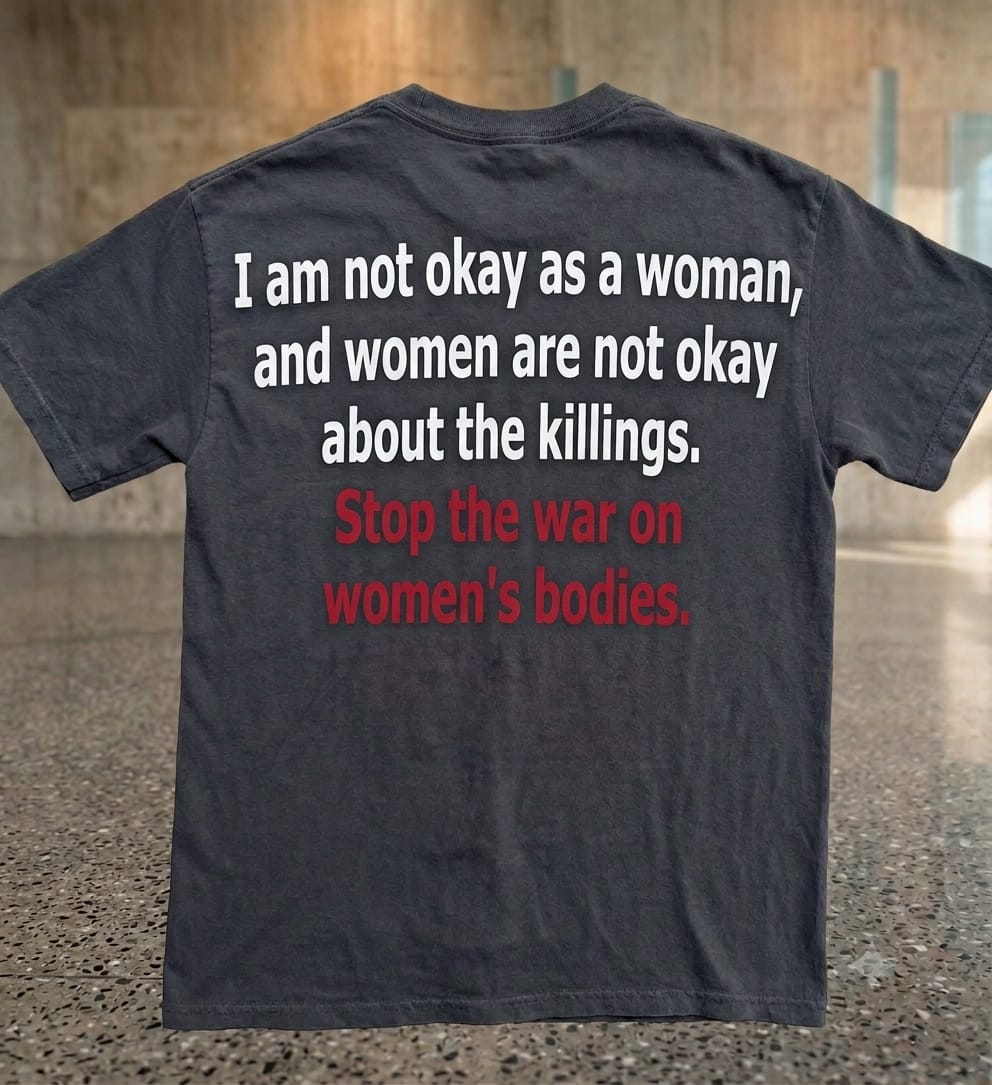
We are not okay. This is not a request for comfort; it’s a declaration of a profound and pervasive crisis. Across our communities, in our cities, and in the very spaces where we should feel most secure, women are engaged in a constant, exhausting battle for safety, for autonomy, and for the simple, fundamental right to exist without fear.
We, as women of South Africa, mourn. We mourn the horrifying loss of the eight women recently taken from us in Ekurhuleni, whose deaths have sent shockwaves across the nation. But we also mourn the nameless, the uncounted, and the countless other women whose stories never trend on social media, whose names never reach the headlines, and whose lives are quietly stolen in the shadows. Every single woman who has passed on at the hands of gender-based violence deserves to be remembered, honoured, and fought for.
This recent escalation, these eight names that now belong to the long and heartbreaking register of victims, demands more than just our grief. It demands a radical reimagining of how we, as a society, protect and value women’s lives. It is a chilling amplification of a statistic, a tangible, visceral pain that exposes the deep fissures in our societal fabric.
These women were daughters, sisters, mothers, friends. They were providing for their families, chasing their dreams, navigating the complexities of their lives. And they were taken, not by chance, but by a systemic, embedded disregard for their humanity.
The war on women’s bodies is a brutal reality. It manifests in countless forms, from the normalised harassment of daily life to the ultimate and irreversible acts of violence. It is an intricate web of physical coercion, emotional manipulation, and systemic oppression that seeks to control, dominate, and ultimately silence us. We are targeted not for what we do, but for who we are. Our physical forms are treated as battlegrounds, subject to relentless scrutiny, unwanted touching, violation, and, all too often, destruction.
This constant threat shapes every facet of our lives. When we go for a run in the morning—like Elizabeth Moselakgomo, who simply stepped out to jog and never came back home to her child—a simple act of self-care and freedom becomes a tactical operation fraught with danger.
We calculate the route, the time, the potential risks. We carry our keys as weapons. We check our surroundings constantly. We learn, through harsh lessons, that our presence in public space is treated as a privilege, not a right. The simple joy of feeling the sun on our face, the wind in our hair, is overshadowed by an ambient anxiety that never truly disappears.
This is not freedom, it is a constrained existence.
For many women, the simple act of going to work in the morning is fraught with similar anxieties. They are providers, the pillars of their families, navigating the public transport and streets early in the morning to build a better future for themselves and their loved ones.
Yet, even in transit and in professional environments, they face harassment, discrimination, and the subtle and not-so-subtle threats that remind them of their vulnerability. This compromises their dignity and inhibits their potential. The workplace and our daily commutes, too, must be safe sanctuaries.
This demand for safety and respect extends into every sphere of community life, including faith spaces. In the rich diversity of our churches and places of worship, women seek spiritual comfort, healing, and community. Yet, even within these sacred spaces, women want and deserve to be safe from harm, exploitation, and abuse.
Religious institutions across all traditions must be sanctuaries where women’s voices are honoured, their dignity is upheld, and their safety is guaranteed without exception.
We are not just statistics; we are individuals with lives and families.
When a woman provides for her family, her contribution is not just economic; it’s the manifestation of her resilience, her dedication, and her love. When she is threatened, her family is threatened.
When her body is violated, her family’s sense of safety and security is shattered. The ripple effect of gender-based violence extends far beyond the immediate victim, poisoning the very foundations of our communities.
The existence of legislation and acts against gender-based violence is a testament to the recognition of this crisis, but these measures are not enough. While essential, these frameworks often remain reactive rather than proactive. They are used to attempt delivery of justice after the fact, in a system that often fails to protect us in the first place. The real challenge, the work that demands urgent attention, is active prevention, swift justice, and relentless enforcement.
Stop the war on women’s bodies. The war is not fought with traditional weapons, but with a culture of entitlement, of complicity, and of silence. It is fought when we look away from harassment, when we normalise controlling behaviours, when we prioritise the reputations of institutions over the safety of individuals. The war is fought every time a woman is silenced, dismissed, or blamed for her own assault.
We demand more. We demand to go for a run, not as a defiant act, but as a simple, joyful expression of our freedom. We demand to go to work, not as a battlefield negotiation, but as a confident step towards building a future.
We demand that our bodies be our own, sacred and inviolable.
The tragedy of the eight women lost in this short period, along with every unseen victim whose life was cut short, must not be in vain. Their lives must become the catalyst for genuine, lasting change. This is not a women’s issue; it is a human rights issue and a societal failure. The responsibility to fix it lies with us all.
We must dismantle the structures that perpetuate this violence, challenge the attitudes that enable it, and demand a world where every woman, everywhere, can live without fear.
We must create a world where our bodies are no longer a target, a world where the war on women’s bodies is finally, decisively, won.